We use cookies
We use cookies and similar technologies to enhance your browsing experience, analyze site traffic, and personalize content and ads. By clicking "Accept", you consent to our use of cookies. Learn more in our Privacy Policy.
 AspenoteGet it on Google Play
It writes it down.
On your phone.
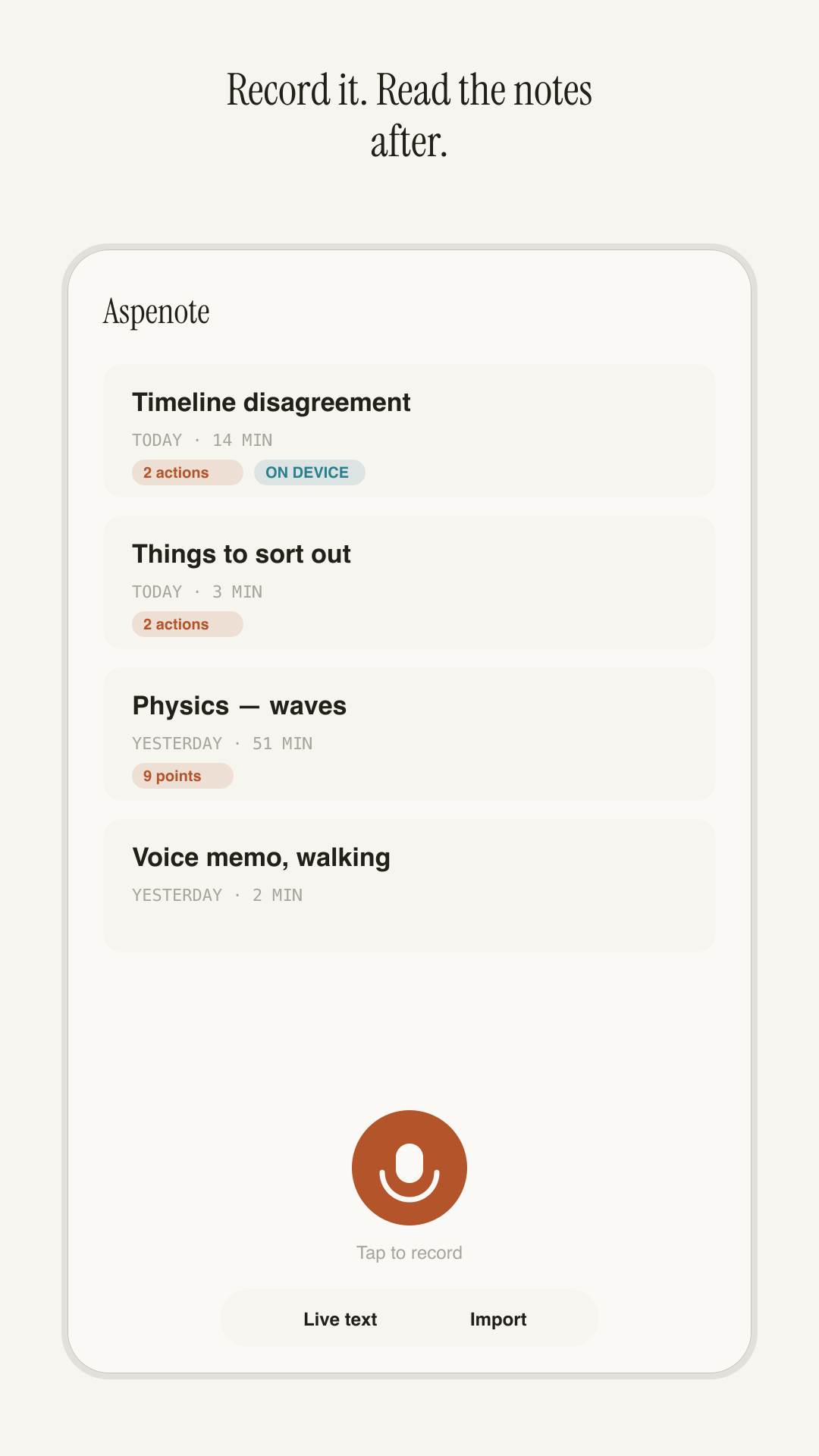
A conversation, a lecture, a thought at midnight — recorded and written up on the device itself. A summary, the things to do, and the whole transcript. Nothing is uploaded, there is no account, and it works with no connection at all.
Get it on Google Play- No account
- Nothing uploaded
- Works offline
- No ads
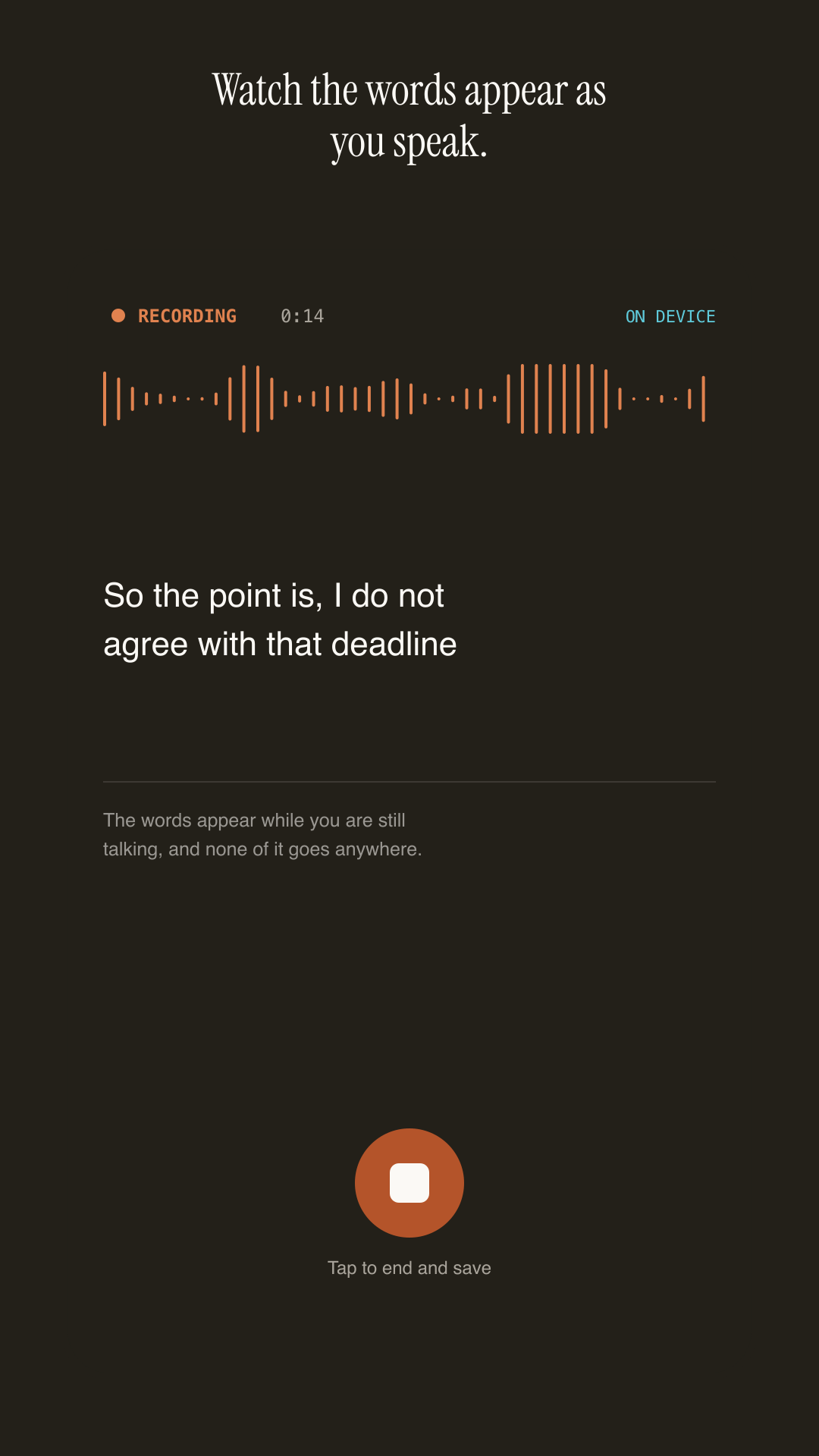
I keep meaning to say this and forg▋
What comes back
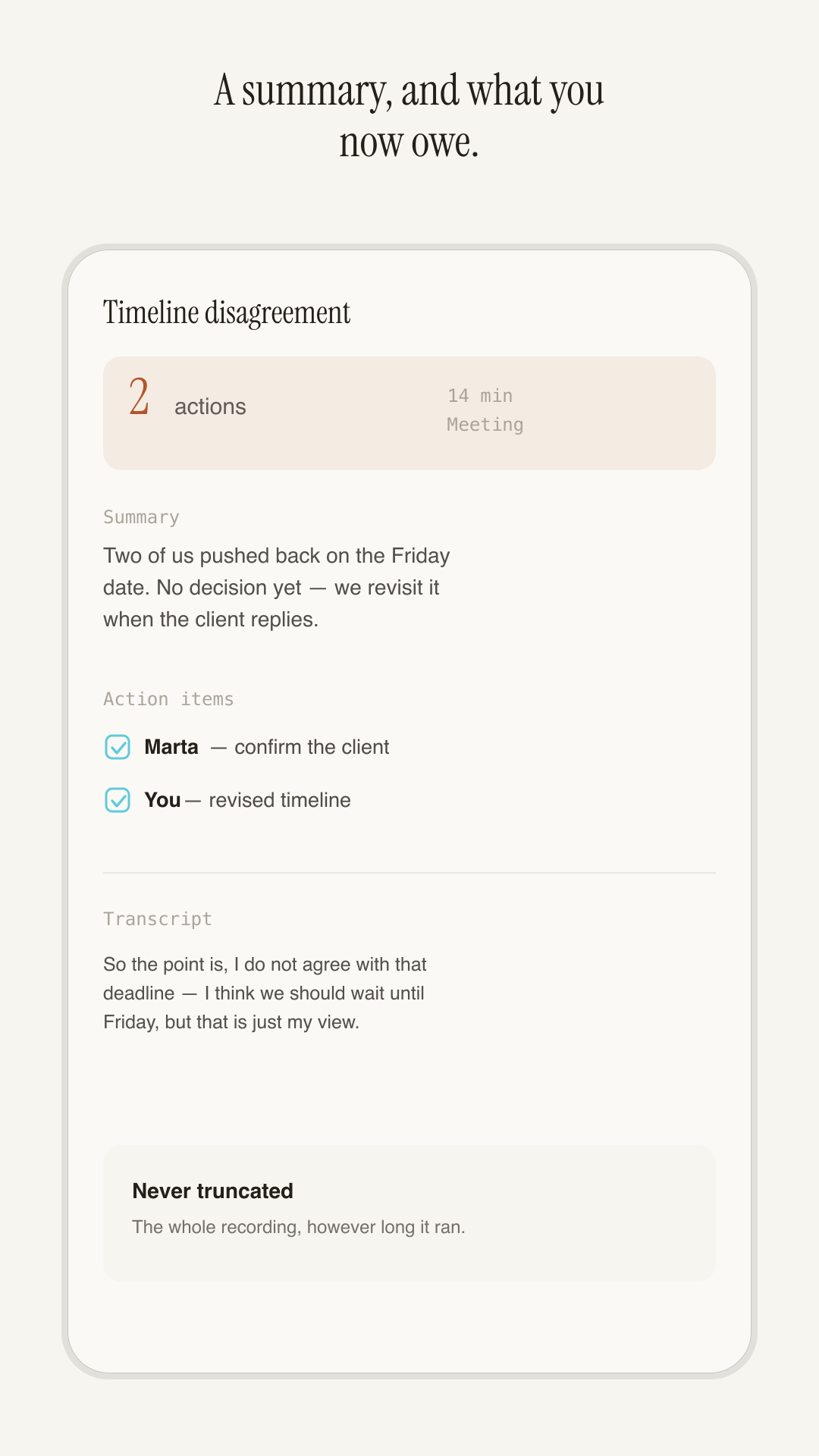
One recording, three things you can use.
A summary
What was actually discussed, in the language it was discussed in — not a translation of it.
The things to do
The commitments that came out of it, pulled from the transcript rather than invented around it.
The full transcript
Underneath, complete, never truncated — however long the recording ran.
On the phone
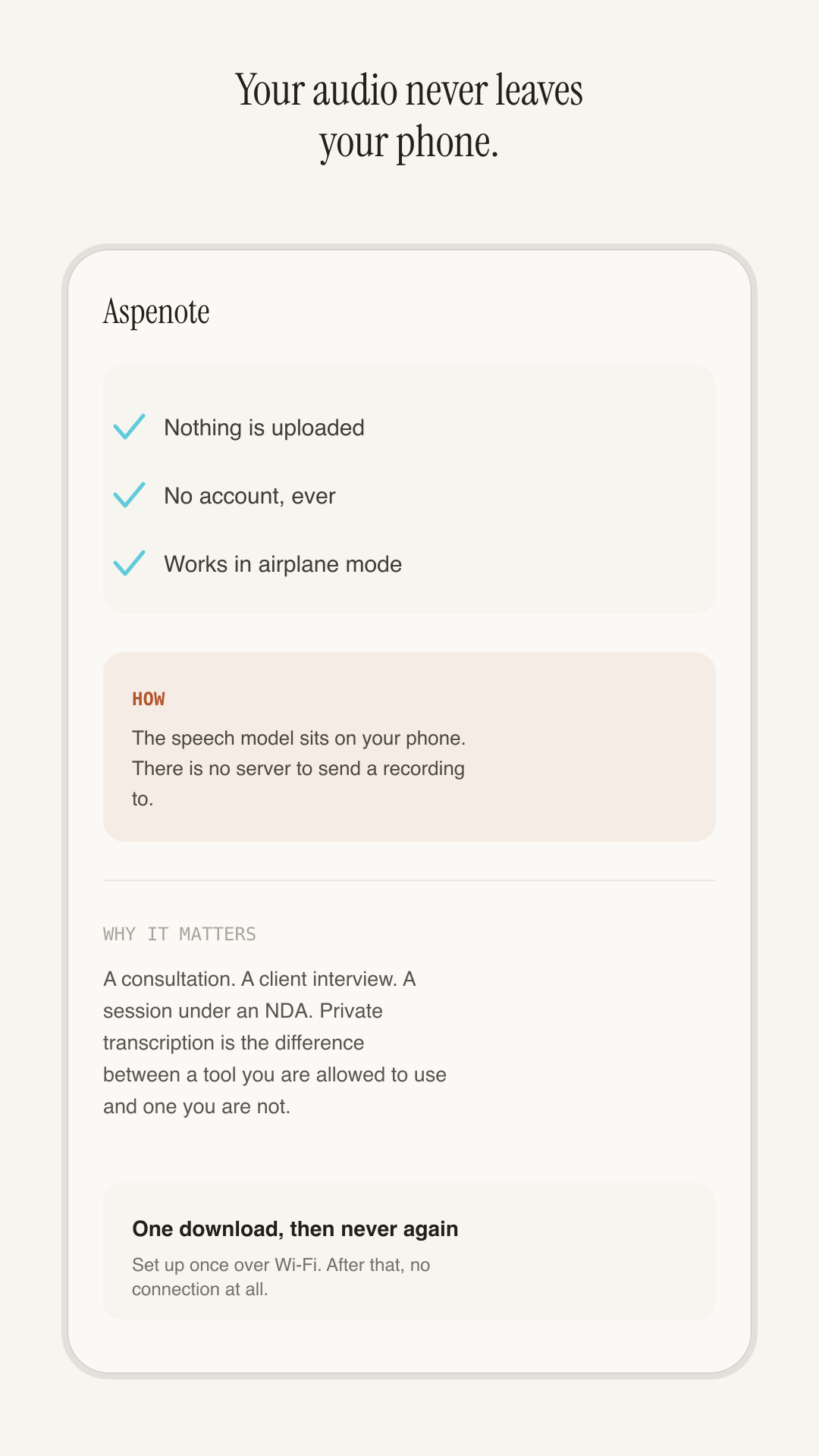
The whole app, not a mockup of it.
The languages it works in
Named, not counted.
Most transcription apps advertise a number taken from the model's own documentation rather than from anyone sitting down and trying it. Every language below was tested on the model Aspenote actually ships with, with more than one voice, before it went on the list.
- English
- Français
- Deutsch
- Italiano
- Português
- Nederlands
A finished note can be translated into many more languages than that, on the device. Translating and transcribing are two different things.
Your recordings
There is nowhere for it to go.
Transcription runs on the phone, so no part of a recording is sent anywhere — not the audio, not the transcript, not the summary. That is a stronger statement than a promise not to look: there is nothing to look at.
For a conversation under an NDA, a consultation, a client interview or a session with a patient, private transcription is the difference between a tool you are allowed to use and one you are not.
Pricing
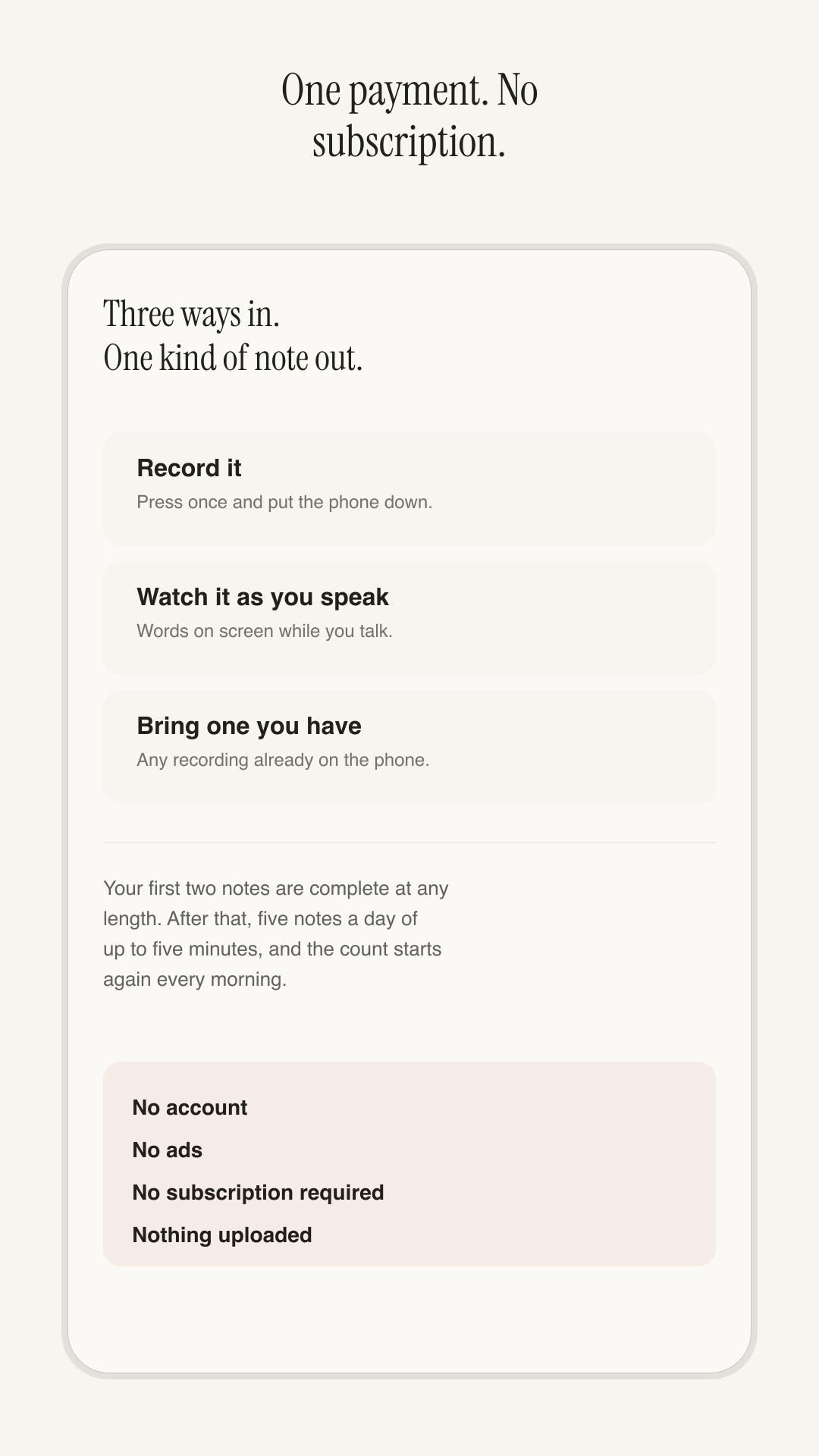
Two complete notes, free.
Questions
The things people ask.
Yes. Transcription, the summary and translation all run on the phone itself. After a one-time setup download the app never needs a connection to turn a recording into a note — it works on a plane, in a basement, or with mobile data switched off entirely.
Record the next one.
Two complete notes, free. No account, no card.
Get it on Google Play